Regulator Urges Caution Over Bushfire Damage and Asbestos
WHS regulators are urging rural communities cleaning up after recent bushfires to remain vigilant regarding the risk of exposed asbestos.

With many parts of Australia reeling in the wake of this summer’s bushfire devastation, rural workers and their communities recovering and cleaning up after the terrifying blazes have been urged by WHS regulators to be vigilant about exposed asbestos.
Asbestos products are likely to be found in domestic and commercial buildings constructed or renovated before 1990.
Typical asbestos-containing materials (ACM) found in older properties include bonded (non-friable) products such as floor tiles, flat fibre cement sheeting (fibro) used in walls and ceilings and corrugated roofing.
Workplace Health and Safety Queensland (WHSQ) said that ACM can crack or spall from the heat generated by fire.
Spalling (breaking off in fragments) occurs when flakes pop off as the heat caused a build-up of pressure inside the material and asbestos fibres are released into the air during spalling.
Fires affecting properties made with ACM can produce a range of asbestos debris, including unburnt and partly burnt pieces, according to WHSQ.
The high heat generated by the fire can severely damage ACM and spread fibres some distance from the affected area.
Unless the fire debris is significantly disturbed, the risk of exposure to airborne asbestos fibres to the public and neighbours is low.
Air monitoring shows that asbestos fibre concentrations typically are very low after a fire, and this is likely to be due to the low numbers of fibres actually released and the large volumes of air circulated by fires.
WHSQ said more significant disturbances, such as during clean-up or demolition of the fire-damaged building, must be done safely to ensure the level of asbestos fibres in the air is kept very low.
To minimise airborne asbestos fibres, make sure to:
- perform a careful assessment of the location of fire-damaged ACM
- restrict people, animals and machinery from affected areas (use warning signs)
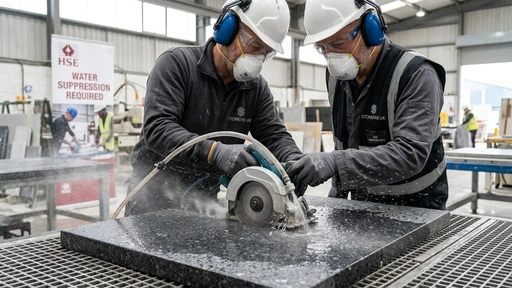
- keep debris wet until it can be cleaned up by a licensed asbestos removalist – but do not use water under pressure.
If visiting a property but not cleaning up, to minimise exposure to airborne dust and other hazards from fire-damaged homes, WHSQ said to wear protective clothing, including:
- sturdy footwear and heavy-duty work gloves
- disposable coveralls (with long sleeves and trousers)
- P2 face masks.
Article originally published by the Australian Institute of Health and Safety.