HSE Bans Dry Cutting of Engineered Stone and Launches Inspection Program
The Health and Safety Executive has banned the dry cutting of engineered stone and announced over 1,000 inspections to enforce water suppression rules.
The following is an abridgement of an article originally published by HSE Network.
Regulatory Changes
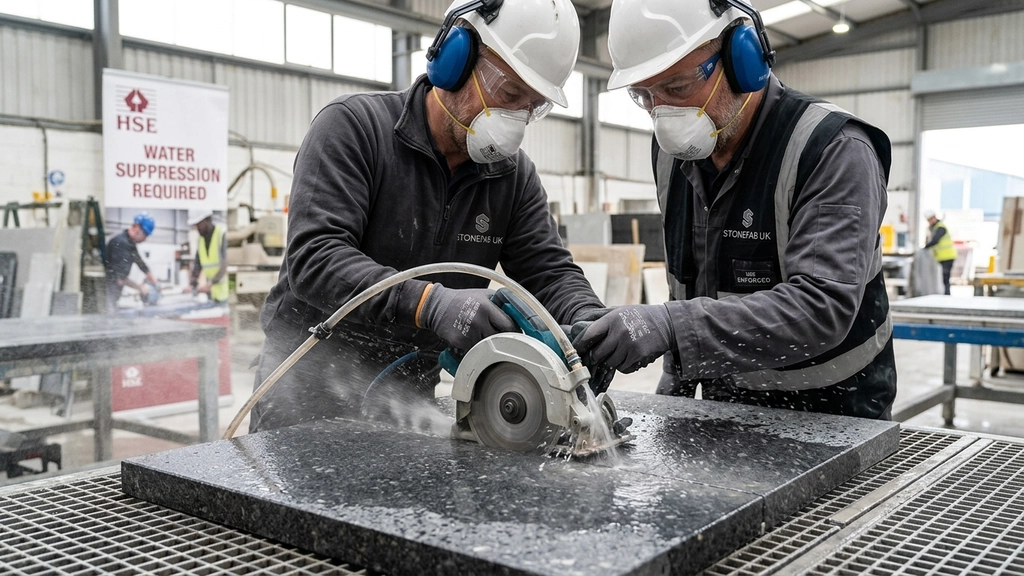
The Health and Safety Executive (HSE) has declared the dry cutting of engineered stone unacceptable, confirming water suppression techniques as a legal requirement to protect workers from silicosis.
The regulator announced it will conduct over 1,000 inspections across Great Britain over the next 12 months, with enforcement action planned for non-compliant businesses.
New Guidance and Requirements
Following a two-year research period, the HSE published its first Control of Substances Hazardous to Health (COSHH) guidance sheet specifically for engineered stone.
The guidance outlines legal requirements including switching to low-silica engineered stone, utilising on-tool water suppression, controlling mist, providing respiratory protective equipment, and conducting regular health surveillance.
According to the HSE, research indicated that dry fabrication methods result in respirable crystalline silica exposure five to ten times higher than wet methods.
HSE Statement
Mike Calcutt, Deputy Director in HSE’s Engagement and Policy Division, stated that the guidance represents the most significant intervention in the engineered stone sector to date.
Calcutt noted that silicosis is incurable but preventable, warning that businesses failing to implement proper controls endanger workers and disadvantage responsible organisations. He added that expectations are now unambiguous and HSE inspectors will be enforcing the new standards.