Driver-Assistance Tech Distraction Identified as Top Road Safety Risk for Work Drivers
A global study found confusion and overreliance on advanced driver-assistance systems is now the leading cause of road safety incidents for work drivers.
The following is an abridgement of an article originally published by NSCA Foundation.
Research Findings
Editor's Note: The study cited below based findings on perception surveys, not real road incident statistics.
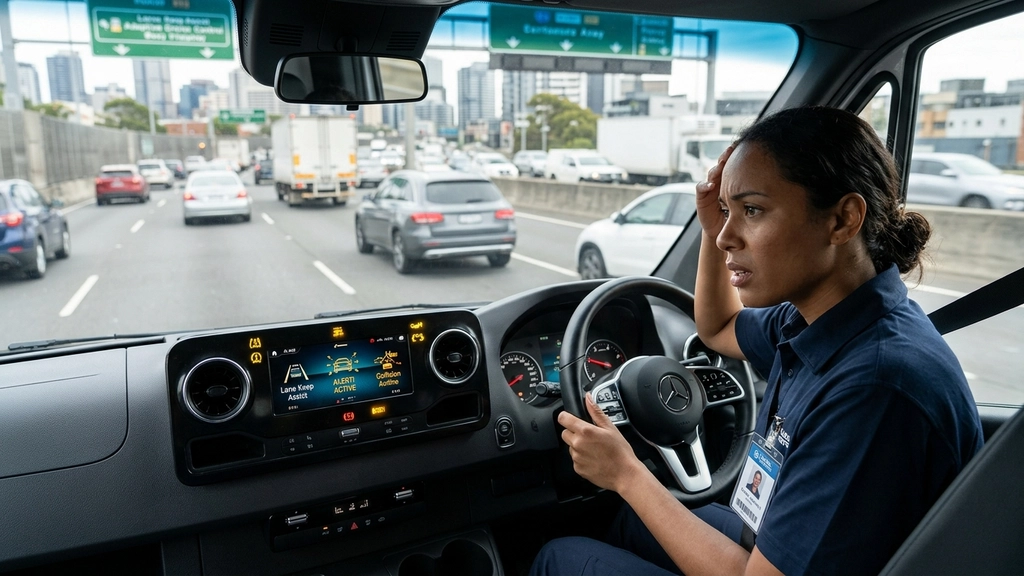
A study by Economist Enterprise, titled "Safety in Motion: Driving Trust in Modern Mobility," found that confusion and overreliance on advanced driver-assistance systems (ADAS) is the leading cause of road safety incidents. According to the research, 30 per cent of transport professionals identify the misuse or misunderstanding of these systems as the primary cause of safety issues, while 24 per cent cite tech-driven, in-cab distractions. Only 3 per cent view traditional mechanical failure as a leading cause.
The study also highlighted concerns regarding vehicle marketing, with 65 per cent of professionals stating that advertisements overstate vehicle capabilities and 62 per cent indicating that marketing implies drivers need to pay less attention than required.
Industry and Regulatory Response
Fleet risk training specialist Drivetech reported that driver behaviour remains the primary factor behind approximately 128,000 casualties on UK roads annually, advising that driver behaviour policies must explicitly address in-vehicle distraction.
In response to these risks, new rules under the UK Automated Vehicles Act 2024 took effect on 7 July, restricting manufacturers from using terms such as "self-driving" or "autonomous" unless a vehicle is fully driverless. The UK Department for Transport issued statutory guidance warning that misleading marketing "can mislead drivers into thinking that they do not need to pay attention to the road."
The NSCA Foundation noted that these findings indicate Australian employers must update fleet safety policies to explicitly address driver overconfidence and misunderstanding of assisted-driving features, rather than relying solely on fatigue and mechanical-fault protocols.